Crypto
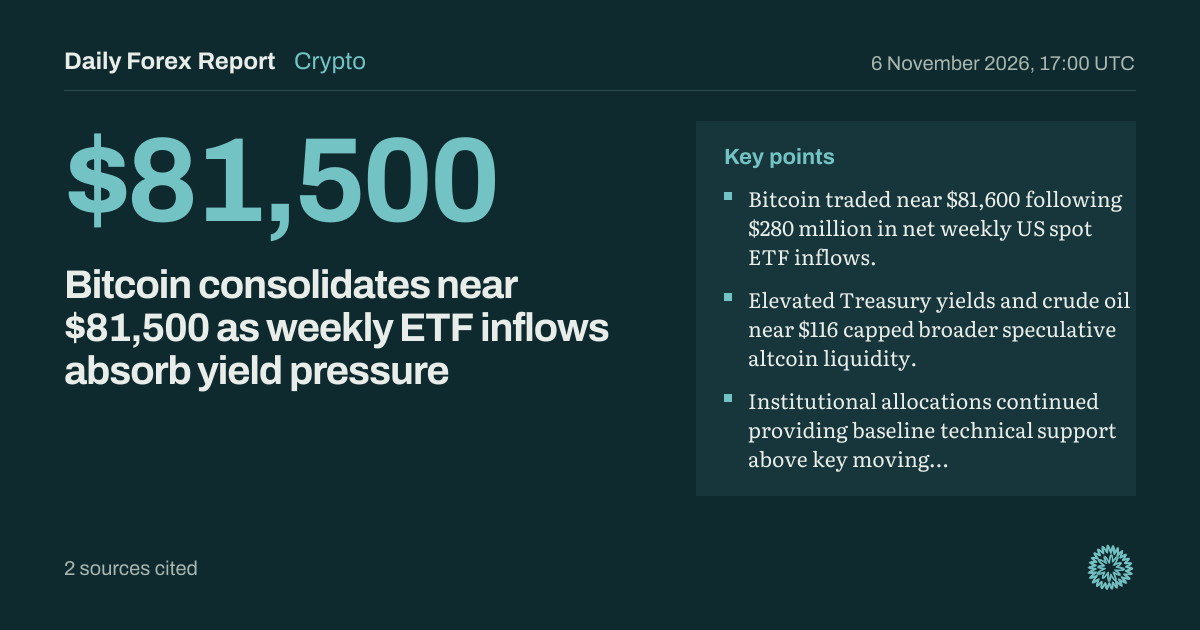
Bitcoin consolidates near $81,500 as weekly ETF inflows absorb yield pressure
Bitcoin held above $81,500 on Friday as continuous institutional spot ETF inflows counteracted pressure from 10-year Treasury yields rising past 5.04%.
Key points
- Bitcoin traded near $81,600 following $280 million in net weekly US spot ETF inflows.
- Elevated Treasury yields and crude oil near $116 capped broader speculative altcoin liquidity.
- Institutional allocations continued providing baseline technical support above key moving averages.
Digital asset markets maintained steady footing on Friday, November 6, as Bitcoin defended critical technical support above the 81,500 dollar threshold, demonstrating remarkable resilience against a sharp post-payrolls surge in US government bond yields.
Spot Bitcoin traded near 81,650 dollars during Friday afternoon dealings in New York. The leading cryptocurrency withstood pressure from benchmark 10-year Treasury yields climbing to 5.04 percent, underpinned by sustained institutional demand across regulated investment vehicles. Primary US spot Bitcoin exchange-traded funds recorded net inflows of approximately 280 million dollars over the week, extending the positive allocation trend established in late October.
Market analysts noted that direct institutional participation via exchange-traded products continues to alter market microstructure. While speculative retail sentiment across smaller alternative tokens remained subdued under restrictive global monetary policy, corporate and institutional allocators treated technical dips toward 80,000 dollars as strategic entry points for long-term reserves.
Broader financial conditions remained constrained by elevated energy benchmarks and firm dollar valuations across global currency desks. Brent crude held near 115.80 dollars per barrel as ongoing maritime logistics friction in the Persian Gulf preserved an elevated floor under transportation fuel costs.
Derivatives exchange open interest stabilized heading into the weekend, with funding rates on perpetual contracts reflecting balanced positioning as macro traders digested the implications of resilient US employment data and higher borrowing costs.