Economy
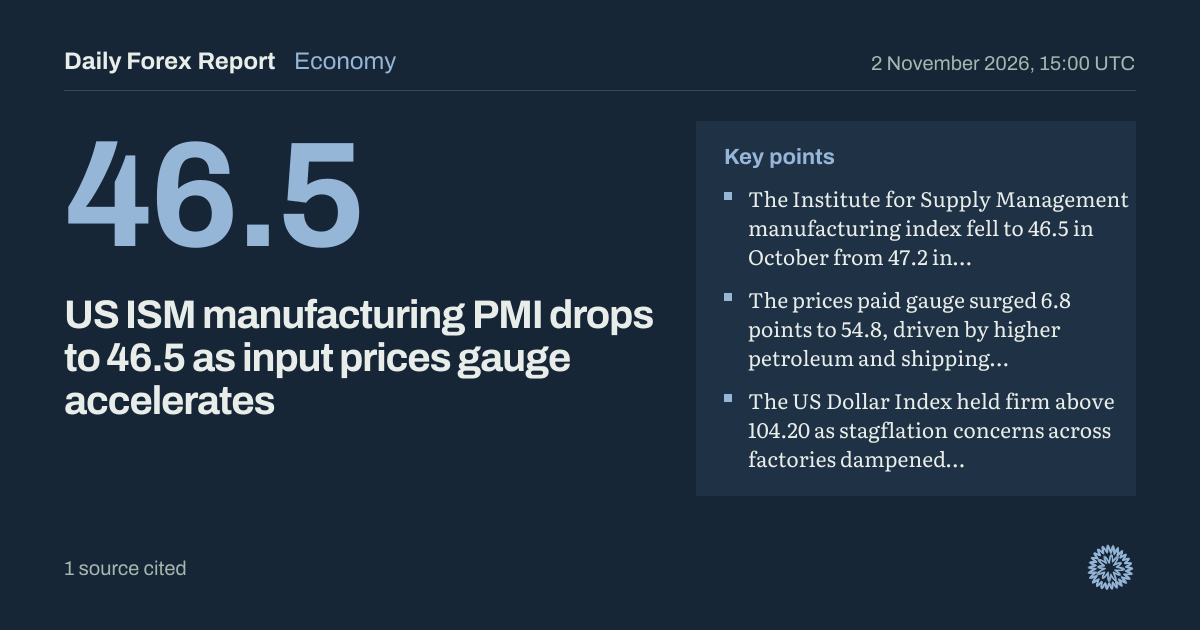
US ISM manufacturing PMI drops to 46.5 as input prices gauge accelerates
The US ISM manufacturing index slipped to 46.5 in October while the prices paid sub-index jumped to 54.8, highlighting persistent supply-chain and energy cost pressures.
Key points
- The Institute for Supply Management manufacturing index fell to 46.5 in October from 47.2 in September.
- The prices paid gauge surged 6.8 points to 54.8, driven by higher petroleum and shipping expenses.
- The US Dollar Index held firm above 104.20 as stagflation concerns across factories dampened rate-cut expectations.
Manufacturing activity across the United States contracted at a faster pace in October as domestic industrial output grappled with higher borrowing rates and surging energy expenses, according to data released by the Institute for Supply Management on Monday, November 2.
The headline ISM Manufacturing Purchasing Managers Index slipped to 46.5 percent from 47.2 percent in September, remaining below the 50 percent threshold that divides industrial expansion from contraction for the eighth consecutive month. New orders softened modestly to 47.1, while manufacturing production ticked lower to 46.2 as corporate clients deferred major capital inventory commitments ahead of year-end balance sheet closures.
Crucially for monetary policymakers, the ISM prices paid sub-index jumped 6.8 percentage points to 54.8 percent, breaking a two-month pause in price acceleration. Purchasing executives cited crude oil holding firmly above 115 dollars per barrel and elevated maritime freight surcharges as direct drivers of rising raw material expenses. The jump in factory input costs underscores that inflationary pressures persist along the domestic production pipeline despite sluggish final consumer demand.
Financial markets reacted with defensive positioning across currency and fixed-income desks. Benchmark 10-year US Treasury yields held near 4.98 percent, while the US Dollar Index maintained its upward momentum against European currencies. Currency traders noted that rising input prices prevent the Federal Reserve from offering policy relief, keeping short-term interest rate differentials firmly anchored in favor of the dollar.