Commodities
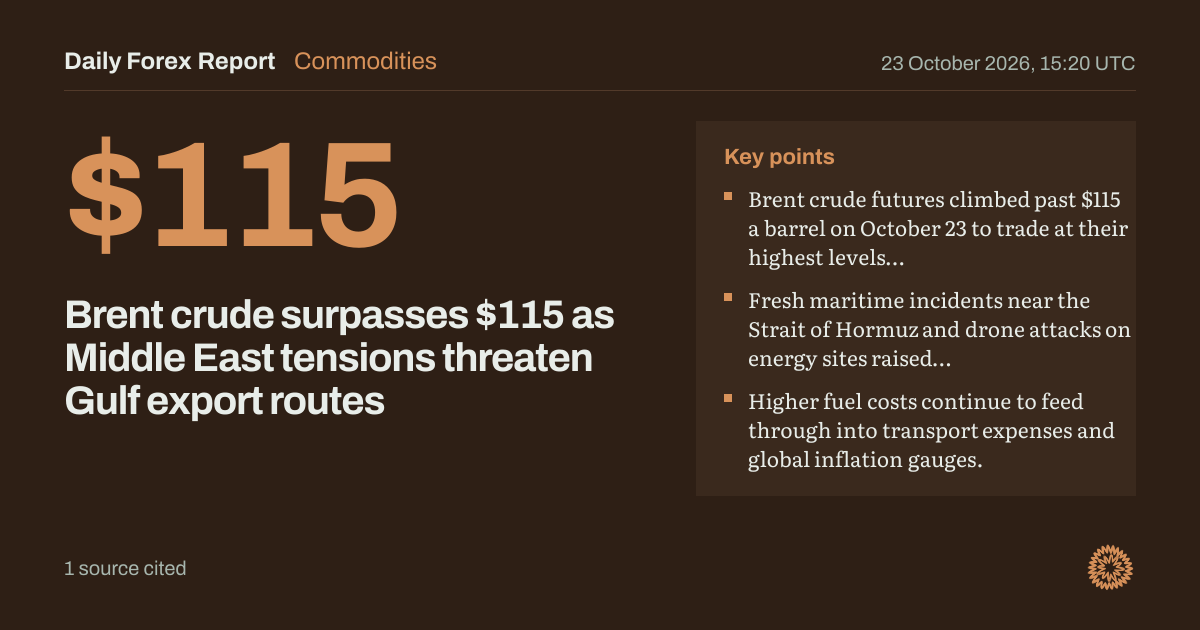
Brent crude surpasses $115 as Middle East tensions threaten Gulf export routes
Brent crude oil pushed past $115 a barrel on October 23, touching a five-month peak as tanker security concerns in the Gulf and supply bottlenecks intensified.
Key points
- Brent crude futures climbed past $115 a barrel on October 23 to trade at their highest levels since May.
- Fresh maritime incidents near the Strait of Hormuz and drone attacks on energy sites raised supply risk premiums.
- Higher fuel costs continue to feed through into transport expenses and global inflation gauges.
International crude oil benchmarks surged to fresh multi-month highs on Friday, October 23, as geopolitical tensions in the Middle East and ongoing threats to Gulf maritime routes heightened global supply anxiety. Brent crude futures rose above 115 dollars a barrel during European trading, touching levels last seen in May.
The price advance follows repeated disruptions to tanker traffic in waters south of the Strait of Hormuz, where maritime security agencies reported increased naval mine activity and navigation warnings over the past week. Energy infrastructure in the region has also remained under pressure following missile and drone strikes targeting transport corridors and storage terminals in Saudi Arabia.
Crude markets had already been operating under tight supply balances. Although the International Energy Agency noted in its October assessment that Gulf shipments had partly recovered toward 75 percent of earlier capacities, logistical bottlenecks and elevated tanker insurance premiums have hindered the flow of crude to European and Asian refiners.
The persistent strength in energy prices is reverberating through broader financial markets. High fuel and diesel costs have fed directly into transportation expenses, pushing retail automotive fuel prices higher across Europe and North America and complicating efforts by major central banks to return inflation to 2 percent targets.
Energy producers on global equity bourses gained on the move, while transportation and retail shares retreated under the weight of higher operating overheads. Market participants will watch next week's inventory reports from the US Energy Information Administration for further evidence of commercial stock draws.