Commodities
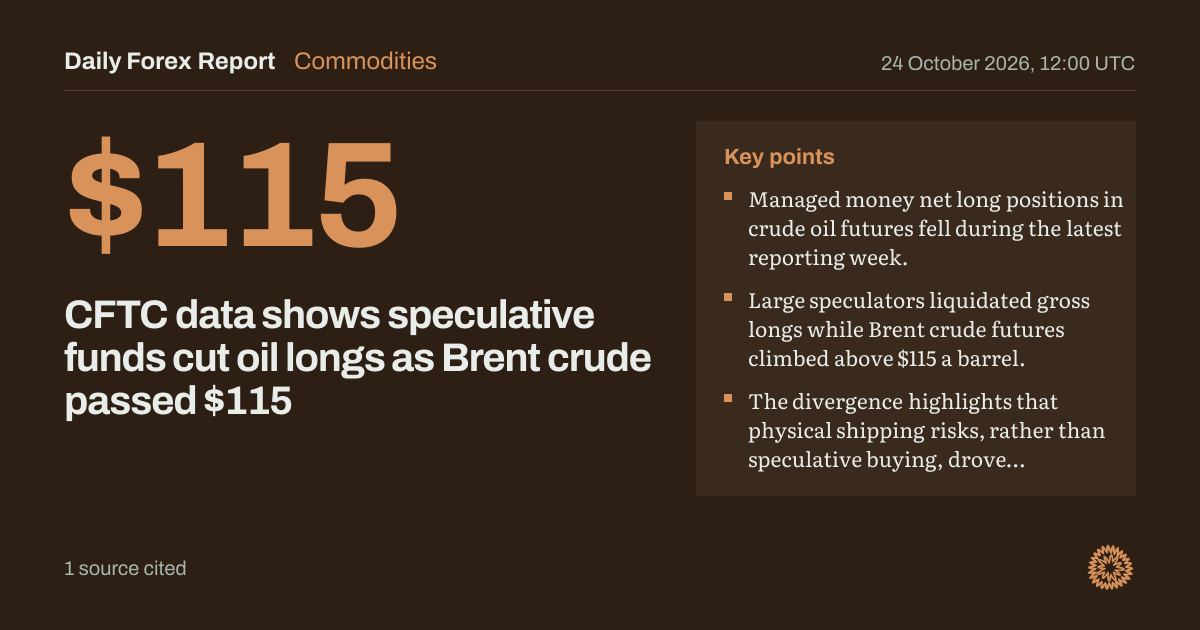
CFTC data shows speculative funds cut oil longs as Brent crude passed $115
Hedge funds and managed money reduced net long positions in crude oil futures, CFTC data show, even as Brent climbed past $115 a barrel on Gulf supply threats.
Key points
- Managed money net long positions in crude oil futures fell during the latest reporting week.
- Large speculators liquidated gross longs while Brent crude futures climbed above $115 a barrel.
- The divergence highlights that physical shipping risks, rather than speculative buying, drove the rally.
Large speculative traders and hedge funds trimmed bullish bets on crude oil even as market prices pushed to five-month peaks, according to the latest Commitments of Traders report published by the Commodity Futures Trading Commission on Saturday, October 24.
The data, which tracks positioning through the close of trading on Tuesday, October 20, showed managed money accounts reducing their net long exposure across light sweet crude futures and options. The decline reflected steady long liquidation by systematic funds and multi-strategy desks following several weeks of sharp price advances.
The drop in paper positioning stands in contrast to developments in physical energy markets, where international benchmark Brent crude rallied above 115 dollars per barrel heading into the weekend. Physical crude premiums climbed following repeated maritime incidents near the Strait of Hormuz and drone attacks on pipeline transit infrastructure in Saudi Arabia, forcing commercial refiners to compete aggressively for immediate prompt deliveries.
Market analysts noted that the divergence between speculative positioning and cash market prices indicates that the oil rally has been driven by tangible supply disruption fears and logistical bottlenecks rather than speculative excess. Commercial hedgers, including oil producers and merchants, expanded short hedges to lock in elevated price levels across the forward curve.
Energy price pressures will remain in the spotlight next week as the Federal Open Market Committee meets on October 27 and 28. Elevated energy costs continue to feed through into transport and production overheads, reinforcing expectations that major central banks will keep borrowing costs higher for longer.