Economy
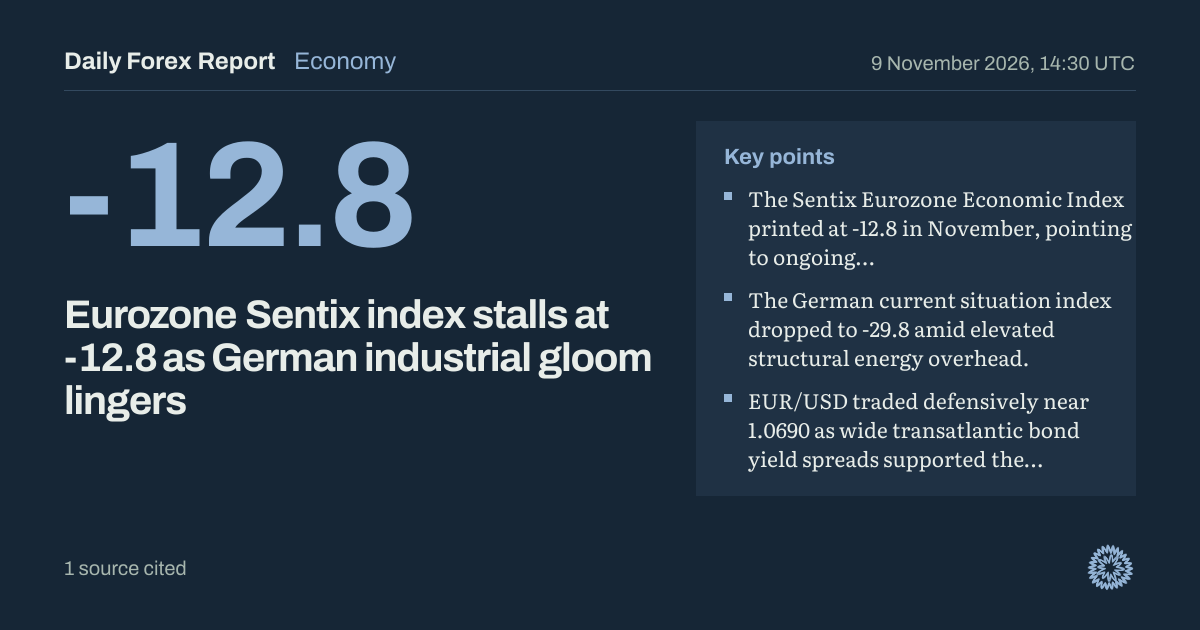
Eurozone Sentix index stalls at -12.8 as German industrial gloom lingers
Eurozone investor sentiment remained subdued at -12.8 points in November, with German economic conditions falling to -29.8 as elevated electricity expenses constrained European industrial output.
Key points
- The Sentix Eurozone Economic Index printed at -12.8 in November, pointing to ongoing stagnation.
- The German current situation index dropped to -29.8 amid elevated structural energy overhead.
- EUR/USD traded defensively near 1.0690 as wide transatlantic bond yield spreads supported the dollar.
Investor confidence across the Eurozone remained firmly anchored in negative territory entering November, according to survey results published by behavioural research group Sentix on Monday, November 9, underscoring persistent industrial lethargy across continental Europe.
The headline Sentix Eurozone Economic Index inched higher to minus 12.8 points from minus 13.8 in October, but remained well beneath levels indicative of genuine economic expansion. The expectations sub-index showed marginal improvement, yet the gauge measuring current economic conditions deteriorated further to minus 21.5 points, highlighting that corporate enterprises continue to experience subdued domestic order intake.
Germany remained the primary contributor to regional economic stagnation. The Sentix current situation index for Europe's largest economy dropped to minus 29.8 points, reflecting deepening structural challenges across heavy chemicals, automotive manufacturing, and engineering sectors. Factory operators cited persistent wholesale electricity surcharges and crude oil holding near 116 dollars per barrel as ongoing burdens on manufacturing competitiveness.
In foreign exchange trading, the euro remained pinned near multi-month lows against the US dollar. Spot EUR/USD hovered around 1.0690, pressured by the stark growth disparity between Europe and the United States. Fixed-income strategists observed that with 10-year US Treasury yields trading above 5.02 percent compared to German 10-year Bund yields near 2.38 percent, sovereign yield differentials continue to favor capital flows into dollar-denominated assets.