Economy
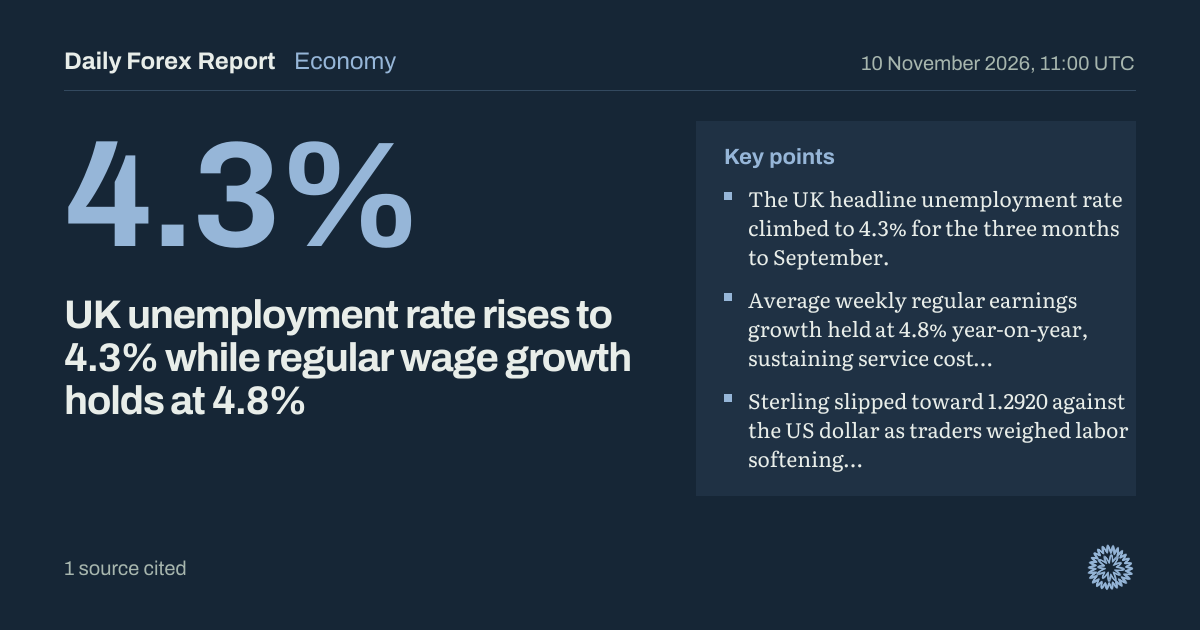
UK unemployment rate rises to 4.3% while regular wage growth holds at 4.8%
The UK unemployment rate rose to 4.3% in the third quarter while regular wage growth remained firm at 4.8%, complicating future Bank of England policy easing deliberations.
Key points
- The UK headline unemployment rate climbed to 4.3% for the three months to September.
- Average weekly regular earnings growth held at 4.8% year-on-year, sustaining service cost pressures.
- Sterling slipped toward 1.2920 against the US dollar as traders weighed labor softening against inflation.
The United Kingdom labour market displayed conflicting economic signals on Tuesday, November 10, as official figures published by the Office for National Statistics showed rising joblessness alongside persistently elevated wage growth.
The headline unemployment rate climbed to 4.3 percent for the three months through September, up from 4.0 percent in the prior quarter and marginally exceeding market projections. Employers trimmed payroll headcounts across consumer-facing service businesses and retail logistics, reflecting cautious recruitment policies ahead of upcoming corporate tax adjustments. Vacancies across the British economy fell by 35,000 to 831,000, marking the twenty-eighth consecutive monthly decline in unfilled posts.
However, pay metrics illustrated stubborn underlying inflationary dynamics that continue to complicate Bank of England monetary policy. Annual growth in regular earnings, which excludes volatile corporate bonus payments, printed at 4.8 percent year-on-year. Although down from peak levels recorded earlier in the cycle, wage growth remains substantially above the threshold that central bank economists consider compatible with returning consumer price inflation sustainably to the two percent target.
Financial markets responded with broad-based pressure on the British currency. Sterling dropped thirty pips to trade near 1.2920 against the US dollar, while UK benchmark two-year gilt yields slipped three basis points to 4.38 percent. Foreign exchange analysts noted that while loosening employment conditions encourage expectations of future interest rate reductions, persistent wage momentum prevents policymakers from accelerating policy accommodation.